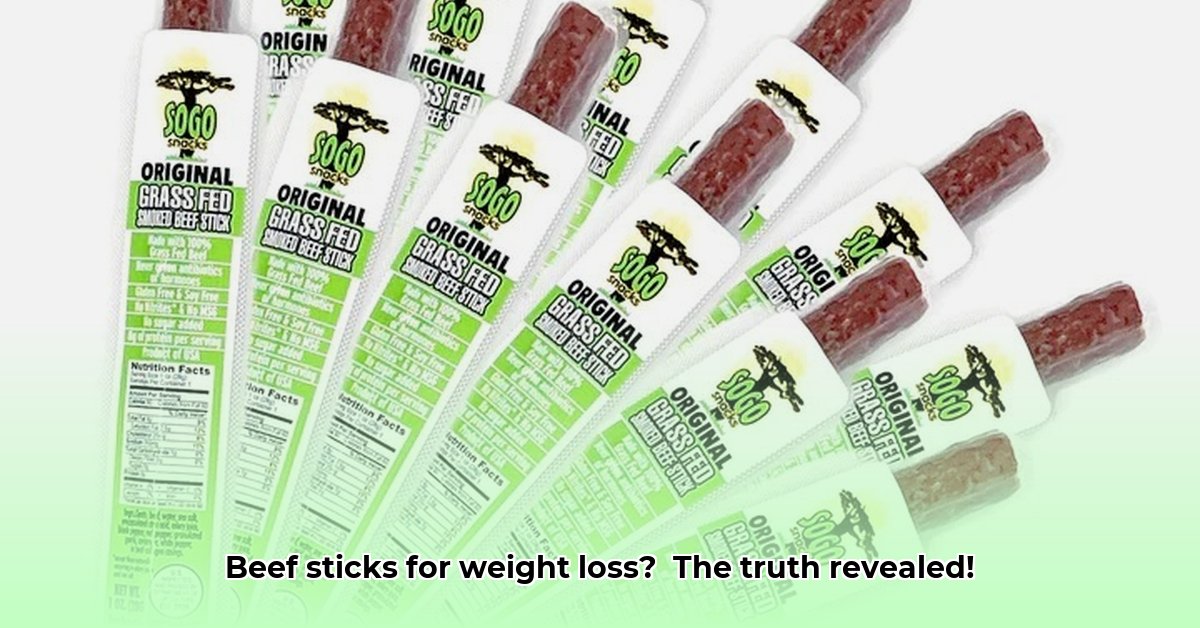
Beef sticks: convenient, protein-packed snacks that seem perfect for weight loss. But are they truly your ally in the battle of the bulge, or a sneaky saboteur? The answer isn't straightforward. It depends heavily on your choices and how you incorporate them into a balanced eating plan. This guide will help you navigate the world of beef sticks and determine if they can fit your weight loss goals.
Understanding the Nutritional Landscape of Beef Sticks
Beef sticks offer a significant advantage: they're a concentrated source of protein. Protein is crucial for weight loss because it promotes satiety (feeling full), curbing those between-meal cravings that can derail your progress. Moreover, protein supports muscle mass preservation during weight loss – a vital aspect of maintaining a healthy physique. Many brands boast 10-15 grams of protein per ounce, a substantial contribution to your daily needs in a small, portable package.
However, the picture isn't entirely rosy. Many beef sticks are unfortunately high in sodium, often exceeding recommended daily limits. Excessive sodium causes water retention, leading to bloating and a falsely elevated weight. Furthermore, they frequently contain significant amounts of saturated fat, which negatively impacts cardiovascular health and can hinder weight loss efforts. It's also important to remember that beef sticks are processed meat; while occasional consumption may not pose major concerns, consistent intake of processed meats has been linked to increased health risks by some studies.
Decoding the Beef Stick Label: Your Guide to Smart Choices
To make informed choices, become a label detective. Thoroughly scrutinize the nutrition facts panel. Look for brands with lower sodium content – the lower, the better. Examine the ingredient list; shorter lists, primarily featuring beef and minimal additives and preservatives, indicate higher quality. Prioritize brands that utilize leaner beef and have minimal added sugars. This extra effort pays off in healthier choices and better results.
Actionable Steps: Integrating Beef Sticks into a Weight Loss Plan
Here's how to strategically incorporate beef sticks into your weight loss plan:
Portion Control: Limit yourself to small servings, one or two sticks, to control calorie intake. View them as a protein boost, not a meal replacement.
Explore Alternatives: Consider turkey jerky as a healthier substitute. It often contains lower fat and sodium than many beef stick brands.
Holistic Approach: Beef sticks are only part of the equation. Ensure you maintain a balanced diet rich in fruits, vegetables, and whole grains.
Comparative Shopping: Do your research! Don't settle for the first brand you encounter. Compare the nutritional information of different options to identify the best fit for your dietary goals.
Read Reviews and Expert Opinions: Check online reviews for specific brands to see what other consumers have found regarding sodium, taste, and overall satisfaction.
Beef Stick Brand Comparison (Illustrative Example)
| Brand | Protein (g/oz) | Sodium (mg/oz) | Saturated Fat (g/oz) | Added Sugars (g/oz) |
|---|---|---|---|---|
| Brand A | 12 | 300 | 2 | 1 |
| Brand B | 15 | 450 | 3 | 0 |
| Brand C | 10 | 200 | 1 | 0 |
Note: This table presents example data. Always verify nutritional information on the product label. Significant variations can occur between brands and even within the same brand across production batches.
The Bottom Line: Informed Choices for Weight Loss Success
Can beef sticks contribute to weight loss? The answer is a qualified "yes," but only with careful selection and mindful consumption. Prioritize brands with lower sodium, minimal added sugars, and higher protein content. By embracing portion control and integrating beef sticks into a well-rounded diet, you can utilize them as a tool to support your weight loss journey. However, always remember moderation is key. They are not a magic bullet but can be a helpful component of a successful strategy.